

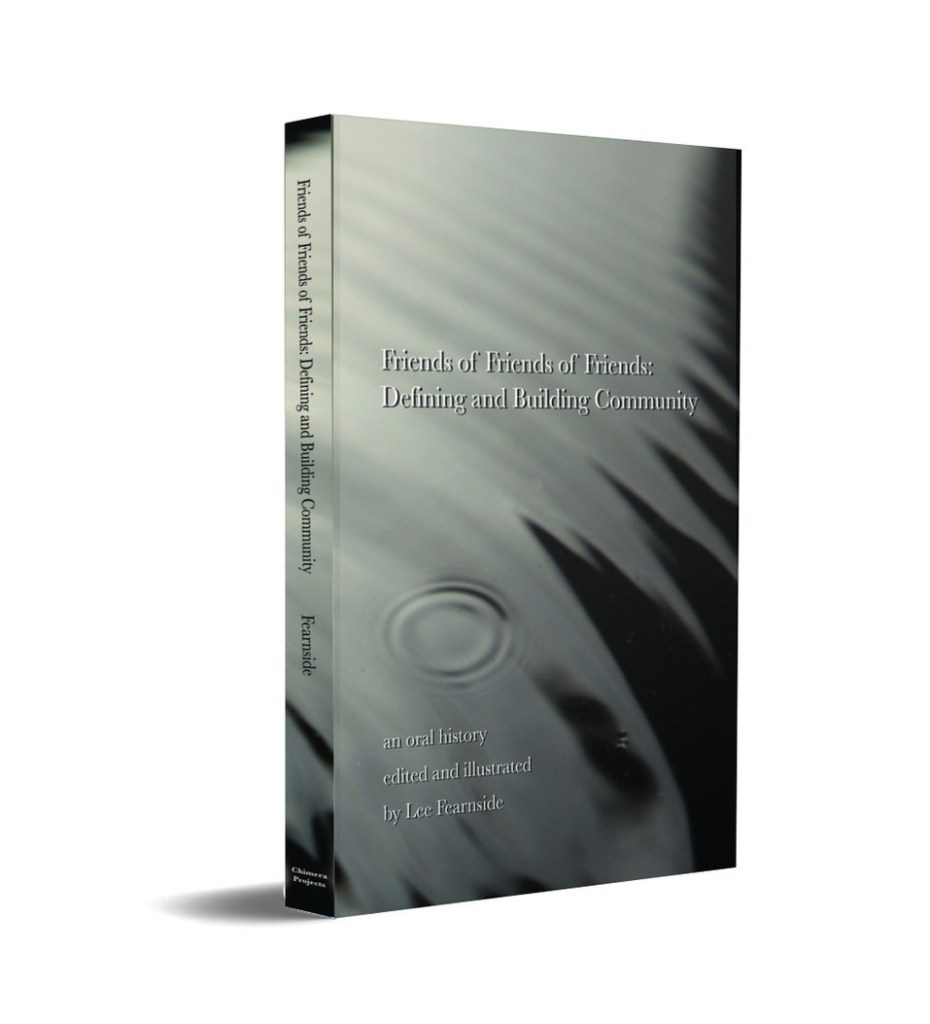
The Harvard Study of Adult Development, the longest continual study of happiness in
Introduction – Friends Of Friends Of Friends
the world, demonstrates that personal relationships are keys to emotional and physical
health (2023). By connecting to each other and to community, we in turn provide for
ourselves. Finding that true feeling of connection isn’t always easy.
Friends of Friends of Friends: Defining and Building Community is a project by Lee Fearnside, who is the artist and editor of O Relentless Death , and here she delves into our human need for community and what community means in the current era, in an time where people are increasingly isolated and more lonely than ever. Over the course of four years, Lee interviewed people from different walks of life and from all over America to explore ideas of what community and social change mean currently, to create an oral history that not just examined connection, but was optimistic about the little guy and how our lives, however small, make a difference.
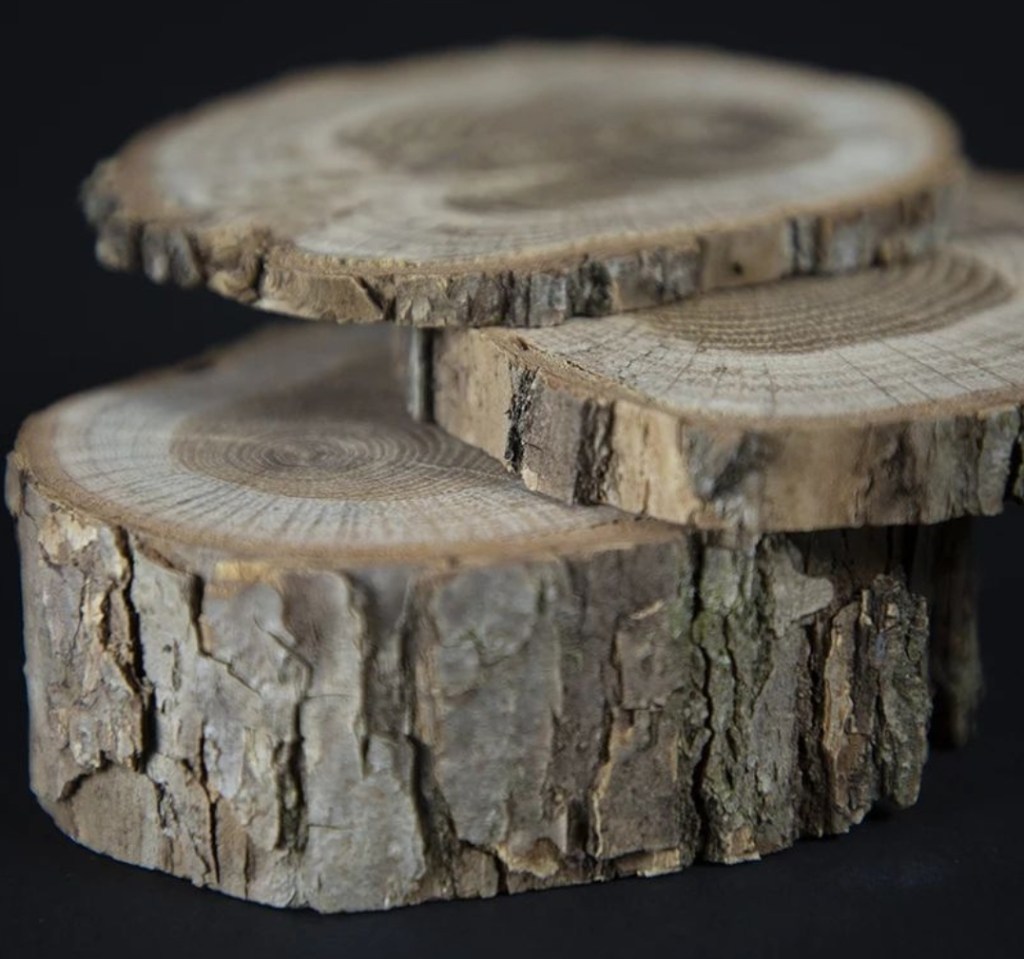
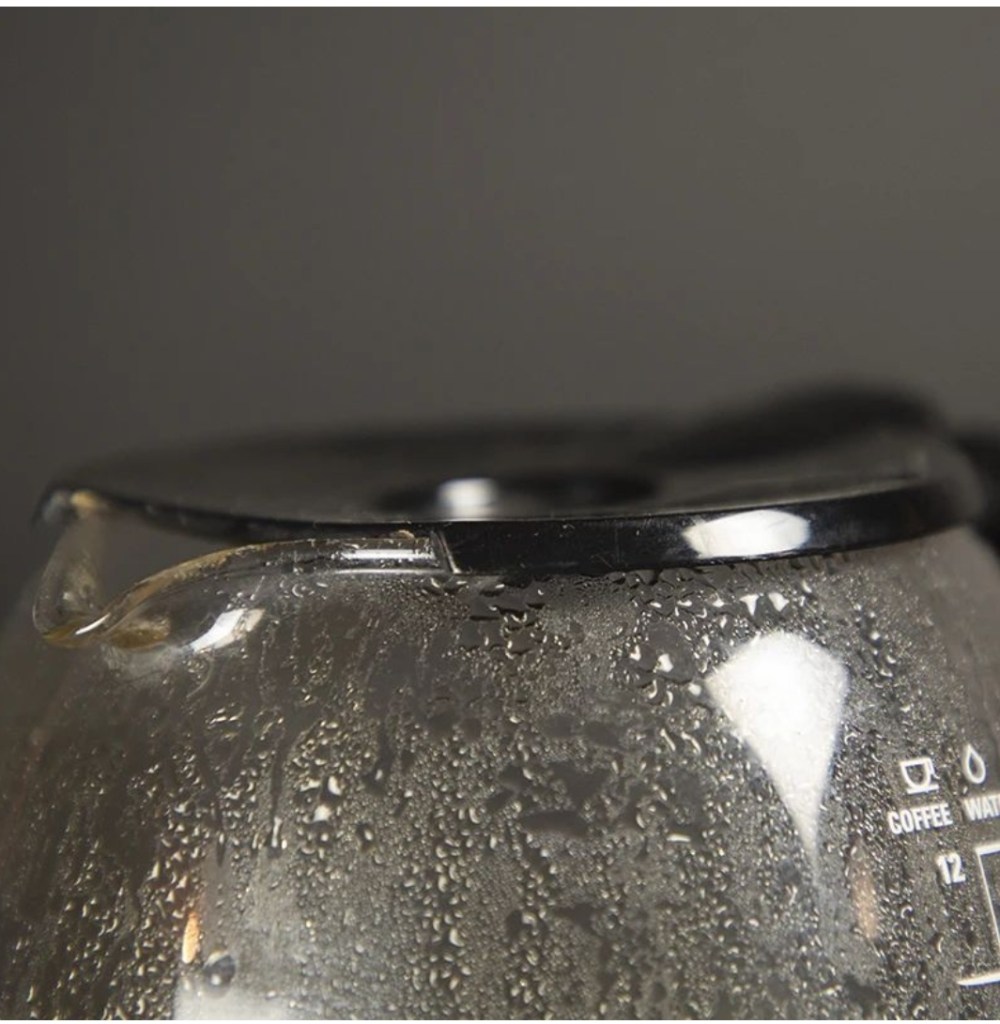
The book is sprinkled liberally with beautiful photographs that visually reflect the thoughts and ideas that the book encapsulates. They all contain objects or things, like studies of modern still life, and most have a more dull or greyish palette, giving a bit of a metallic, sterile, isolated feel overall. I really like them, they are beautiful and rich in meaning, but also so everyday. (One with a vintage clock, not featured here is a favorite) These are the tools, home items or snapshots of natural objects, items that are symbolic of the action of human lives, the smallest unit of community. They reflect to me a certain coldness sometimes, what these things mean in isolation, just like the book is asking, what does a human life or our actions mean in isolation? What small, everyday things do we all use, and is that smallest thing a point of connection?
The book is comprised of many different essays, grouped into chapters with themes of defining, building and belonging in community. The authors are various, from lawyers and professors, human rights scholars and someone from the CDC, to bookstore owners and musicians. The list of people included is impressive, with a wealth of knowledge and experience represented.
One of the things I love about Lee is not only that her work is solid and well researched, but that it also is always coming from a genuine place. Where another person will put forward a posture or an angle, Lee enters with curiosity and humanity. This book could have been a sentimental display or an intellectual exercise, neither of which would have been particularly comforting, the first through feeling like it ignores the truth and the second like it bludgeons you with it. Lee offers us human stories, allows us to make up our own minds, but always lets us know that there’s always beauty in the world, when you look, and that there is always reason for hope. Here, we are reminded that we can be agents of big change and big impact, whether we work for a larger, influential body, or if we are down at the grass roots level.
Read It If: this one will appeal to a range of people. It’s a really interesting look at a variety of lives and communities, and a timely reminder that we all have an impact and our connection matters.
Find out more and purchase here.
Thank you to Lee Fearnside for an ARC of this book for review. All opinions are my own.
 CravenWild