
In the day’s leading up to Agne’s daughter’s wedding, Uncle Malcolm decides to give Agnes a letter, written by her mother, that he’s been holding on to since the war, while Joe anticipates seeing Agnes, whose therapist he was and who he has feelings for. Agnes, meanwhile, thinks back over her failed marriage and the loss of her parents when she was a child. Set in the Oxford area, the book is focuses on introspection, psychology, affairs and broken relationships, and the past.
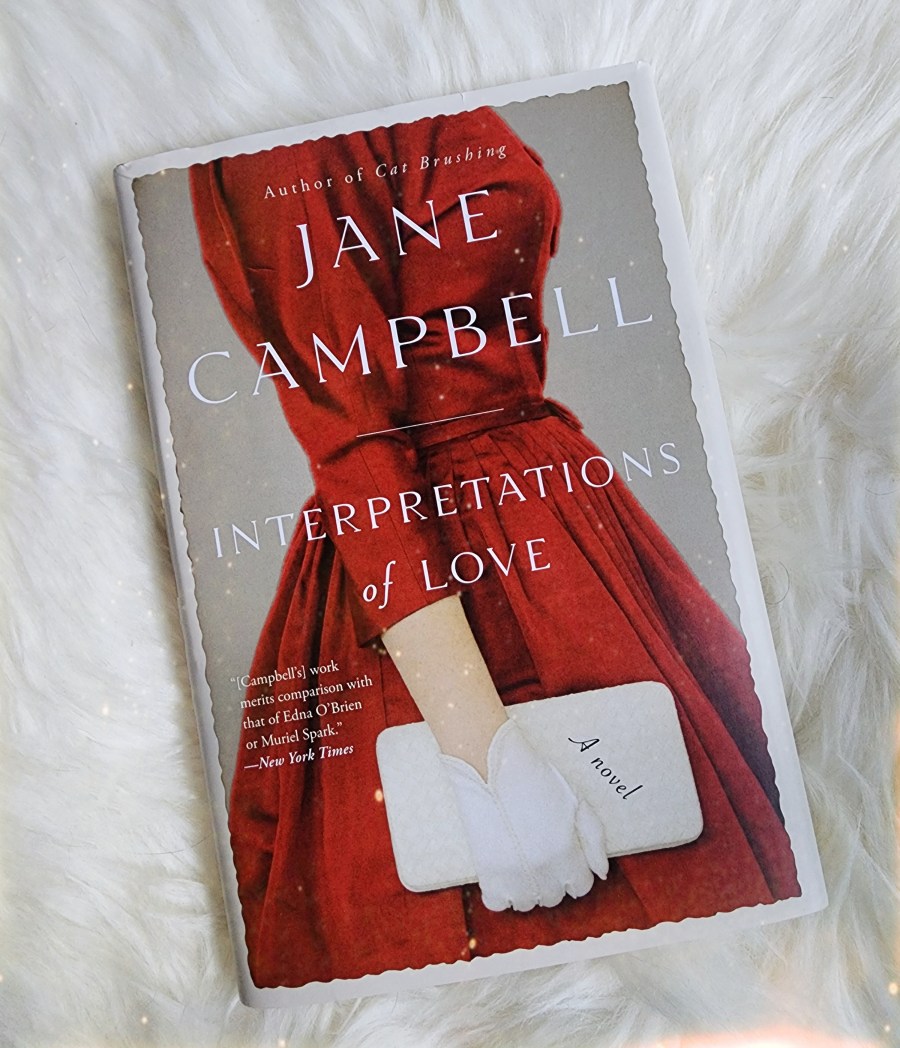
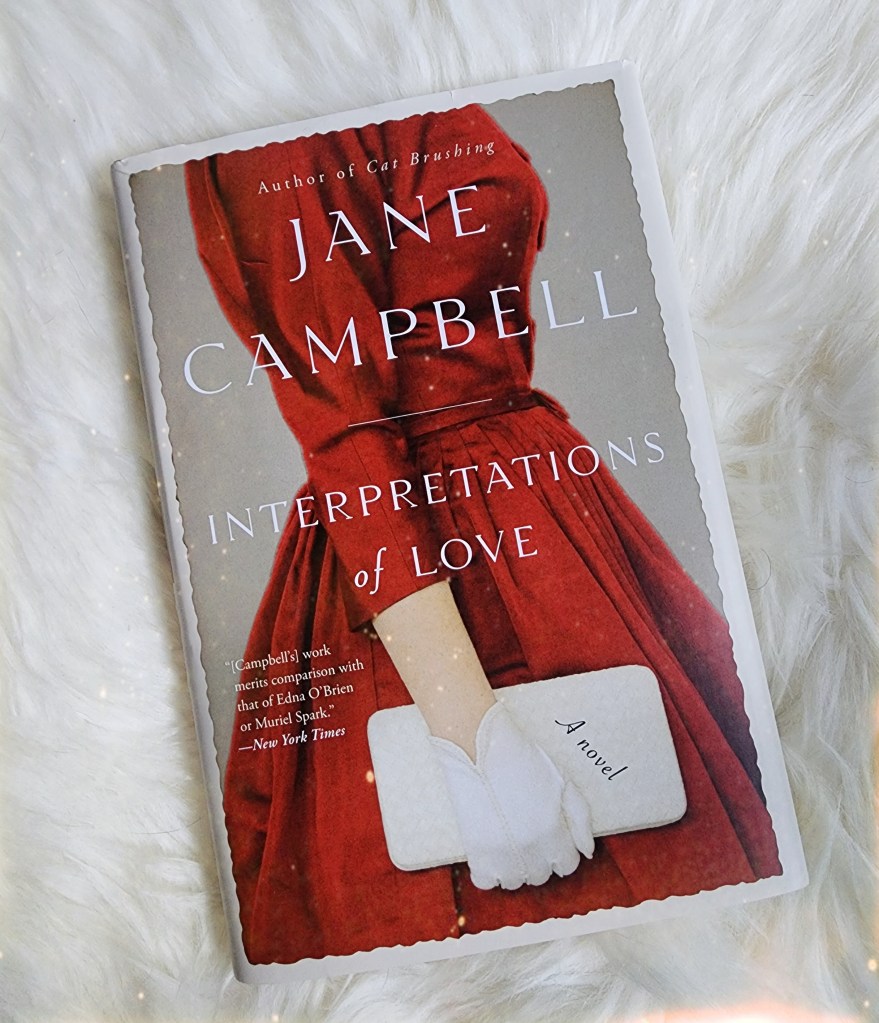
I love the cover design of this book. It’s a lovely 50’s style, with that self, cut on sleeve and full skirt, and I love the little details on the gloves. It’s odd though, because while the 1940’s are an important era in the book, I don’t think the rest of the book takes place in the 50’s. I got the impression that it was set in today’s era. It’s very pretty though.
This is an unusual novel. It’s the debut novel by the author, who has has a private practice as a psychotherapist in Oxford, UK, and who is in her 80’s. She wrote the well received short story titled Cat Brushing, which was then worked into a short story collection with that name, which included stories about the lives and experiences of older women. This is the author’s follow up to that book, and her first full novel.
I love reading work by older writers and older women writers. I love that she wrote her first book in her 80’s, it shows you’re never too old to try things or to achieve things. I also think that characters of this age group are often very poorly written and misunderstood. They’re either decrepit and doddering or overly cute and chipper. We don’t get a lot of their perspective and view of life. So I was very happy to get my hands on this one.
The book jacket states that the book is “about the ways we experience, perceive and misunderstand love”, and that the book is about family secrets and tensions rising to the surface at, or perhaps because of, a wedding. I don’t think this is really the case. I’d say it’s more like three, interconnected character studies about three people who are linked by being related and by the tragic death of Sophy and Kurt in a car accident decades before. Agnes was Sophy’s daughter and her life was forever changed by the accident, Malcolm is her Uncle and Sophy’s younger brother, and Joe had a one night affair with Sophy. The letter that Malcolm has was to Joe, explaining that he may be Agnes actual father and not Kurt, and he decided to keep the letter when she died, rather than deliver it. (This is all set up in the first part of the book, so not spoiler territory).
Initially, I liked this set up with the letter and Malcolm’s decision to finally give the latter to Agnes at the wedding of her daughter. It felt like something that might come up in a Dickens novel, with British character types struggling with their feelings and changing social standing and relationships under this revelation. Choosing not to tell a family secret feels very much like things that used to happen commonly in previous generations. However, the book goes in a different direction.
Broken into large sections titled with who our narrator is and where we are in time, such as a day before the wedding, we are led into the minds and memories of Malcolm, Agnes and Joe. They are not only very introspective characters, which perhaps makes sense with the authors background and for a character study, they are also highly self absorbed and almost sociopathic in their self interested. Personally, to my taste, they were quite unpleasant. Which means that while this book is very rich and beautifully written, dramatic and psychologically real, and in a way I recommend it, I also did not particularly enjoy or like it.
Firstly, Malcolm is quite callous to Agnes when she’s a child. He likes her when she’s happy and he gets to enjoy her innocent nature, but basically shuns her when she’s confused and grieving the sudden loss of her parents. As long as she’s a little doll, basically, and not a human being with feelings, he likes her. It’s quite cruel. Joe is as bad. He treats the women in his life so poorly, being incredibly cruel to them at times. There’s a moment where he sees his spouse blossom in a social setting but doesn’t quite make the connection that this shows he’s been sucking the life out of her. He has frequent affairs. Everyone is this book is constantly having affairs. He sees nothing wrong with being in love with his patient, Agnes. As her therapist, he’s putting himself first. It’s so icky because he’s old enough to be her father, and we know, as readers, that he may actually be her father. No thoughts on how this may make Agnes feel or effect her. What they care about is that she not betray the doll like character they want her to by having real, raw emotions that don’t align with their ideas.
But then, Agnes is… well, I won’t diagnose her or label her, but let me put it this way. On the day of her daughter, Elfie’s, wedding, she sleeps late and does not ask her daughter how she is feeling or help her get dressed or anything like that. Elfie has to get her up. They take a car together, but then Agnes gets out early to walk through the grave where her son is buried, focusing on her own feelings. We get almost no description of the wedding, since that doesn’t interest Agnes, but we see her going over and over her past trauma, and barely thinking about her daughter at all. Elfie is very underwritten. Seen through Agnes eyes, she exists to support her through her feelings, and has none of her own. Agnes acknowledges that she’s been an absent sort of mother in ways, but that’s as far as that goes. She seems to create quite a bit of drama at an event that is not about her, and I snorted when she not only hadn’t written a speech or toast, but seemed hurt that the father of the bride speech was not about her.
Further, each of these three characters are quite Oedipal and a bit incestuous. Malcolm with his sister to some extent and wanting Agnes love all to himself, Joe with loving Agnes because she reminds him so much of his mother and then later making decisions that make her more important than other key relationships. It feels like in this book, women are all mother replacements who are discarded for women who are ever closer to the mother ideal, in an endless cycle. Agnes does this somewhat with the men in her life, as well. But she is also obsessed with her mother, constantly thinking about her, sometimes thinking she sees her, even though she barely remembers her. All three of these characters feel nothing for other people when it’s not convenient, and constantly think about how deep and philosophical their own feelings and thoughts are, as though they are very profound, rather than fairly ordinary or even fairly shallow.
There were a couple of moments while reading that I had to stop to place who a side character was and how they related to the plot as a whole. The book is quite complex and tight, and that means it can be a little confusing. And there was a few moments were a comma might have allowed for a better flow in a sentence. It’s not a dialogue heavy book, either. I say this not because these are major flaws, but rather so you can make a decision as to whether that style might not be for you. The book is short, but asks you to slow down and absorb it, and so it’s not so much a quick read, in a way, than you might expect from it’s size. It’s definitely in literary fiction territory and not a drama about a wedding. There’s a lot of emotion and angst here, but it’s all inner, personal worlds. Poor Elfie. I wonder how she really feels.
Read It If: you like literary fiction and interesting psychological portraits. It’s a bit like fruit cake: rich and dense, with plenty of flavour, but not to everyone’s taste. The characters are not the most fun to spend time with, in my opinion.
Thank you to PGC Books for the copy of this book for review.
 CravenWild