

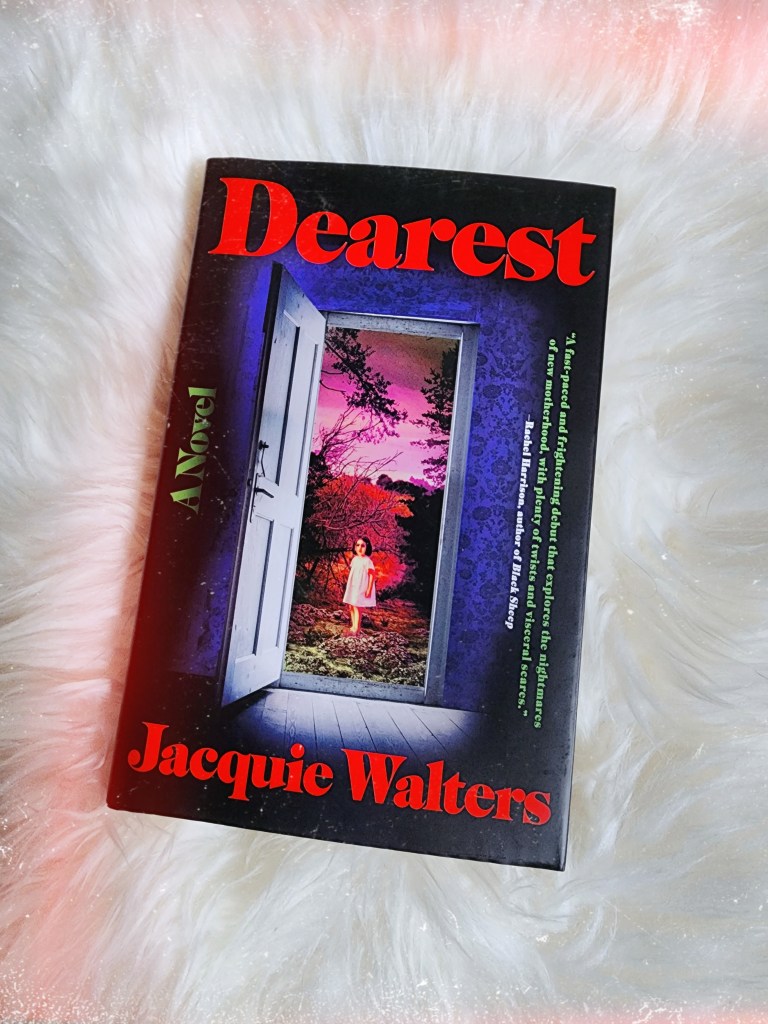
When Flora gives birth to baby Iris a few weeks prematurely, her husband is still deployed overseas, and she finds herself struggling to cope alone. She starts to see strange beetle infestations, has night terrors, and her childhood imaginary friend re-emerges. In a moment of desperation, she emails her estranged mother, who responds by turning up unexpectedly on her doorstep to help. When she opens her door to her mother, is she letting in a chance to reconnect, or has she invited something evil into her home?
As someone who does not have children, I’m not sure how parents do it. Perhaps especially mother’s, who have so much going on in their bodies as they re-adjust to life after giving birth. Because there is so much change, both inwardly and outwardly, in this time in the life of a family, and also since in the past this was a dangerous, sometimes deadly, time in the life of mother and baby, it’s a zone of interest that’s always been ripe for horror stories.
I also find the dark fairytale trope of the mother as a source of evil or bad intentions, rather than as a nurturer and loving force, a very fascinating one. It’s such a dark subversion, and one that feels so dangerous, the fragile child at the mercy of one who feigns innocence but is a cruel one. The wicked step mother, or in real life, the abusive and narcissistic parent. The monstrous woman.
This book, Dearest, plays on this idea. It takes some of the body horror of birth and motherhood, of the changing body or the body out of control, even the aging female body, and it also takes the idea of hormones and the horror of not knowing if your own emotions and feelings are real, as in post partum feelings, and of the woman as “hysterical”, that old notion that women’s bodies make us crazy. The book does this in a way that feels very feminine. It’s about the horror of secrets and the half known, of our primal need to protect our children and also our primal need for our own mothers. It’s not about vilifying or blaming women, or in any way making women seem fragile or gross. It’s about the the things and people that haunt us at times of transition in our lives and about how women are shamed for not being perfect mothers or not naturally knowing all about how to mother.
I liked this book. It’s quite dark. I’m not sure how someone who has children might feel about it. There’s some body horror and gore in it. It has a wonderful atmosphere, with a witchy, claustrophobic feeling, and made me think of The Yellow Wallpaper a little bit. It takes place mostly around the one home, and has motifs like imaginary friends, bug infestations and dirt, night terrors and sleep paralyses, not trusting those close to you and spooky bathroom mirrors. There’s also the fear that comes from loving another whole heartedly, most especially as a parent or a mother, where you’re helpless to completely keep your child safe at all times, and yet you’re also omnipotent in that the child totally relies on and looks to you. Both huge responsibilities.
There’s also something of the dark fairytale here, with the character names. Flora, the Greek goddess of Spring and the name of our heroine, associated with Zephyrus, who loved her. Zephie is her imaginary friends name. Then there is Iris, the name of the baby, who was a messenger of the Gods and could move between worlds. Iris also went to Demeter when her daughter Persephone was taken to Hades. Persephone, of course, like Flora, is associated with the Spring. So we have some themes, without giving too much away, of mothers, loss, death, love, grief and renewed life, and things from other worlds. Gangs all here. I liked this choice. I think it added a layer without being overly obvious or sort of archetypal.
I liked this book. It not a long read, but it feels rich and the right length for the story it’s telling. It shows a great deal about what it’s like being a new mother, the huge pressure, changes and strong emotions that come up, as well as just being an interesting and fresh horror story with a nice amount of twists and turns, and scary things. It could have been another “woman is unreliable narrator” story, but it felt like its own thing to me. I did note, in the author bio, that the author is a Emmy winning screenwriter, and I think this book could make an excellent horror movie.
Read It If: solidly in horror story territory, this is for you if you love female MC horror, but might not be for the faint of heart around pregnancy and motherhood.
Thank you to HBG Canada for the copy of this book for review.
 CravenWild