

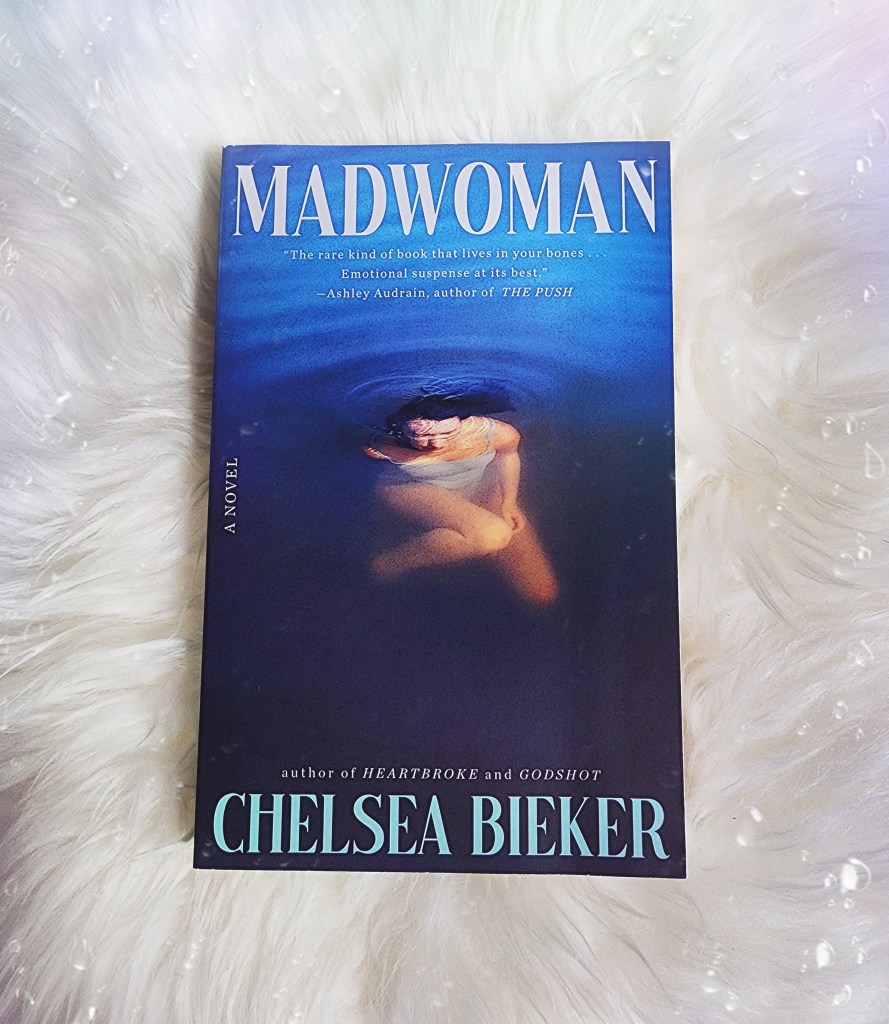
Clove lives the life of her dreams: A loving husband, two gorgeous children, a beautiful home with organic foods and a full closet, but the fears of her secret past coming to light or history repeating means she compulsively takes supplements and uses affirmations and impulse buying to keep the lies she’s told in place. The truth is that she grew up in an abusive home, and what she ran from is about to catch up with her when she gets a letter from her mother in prison.
The book takes place mostly in the present in Portland, but spools back to the past when Clove was growing up, partly in Waikiki. The memories are woven seamlessly into the present, so it’s not a dual narrative style book. The book is in first person, with Clove talking or narrating to her mother, referred to as “you”. I liked that this helps show the reader that the past is always the present when you’re dealing with unprocessed trauma and how abusive family systems create highly enmeshed family bonds, but it sometimes was a little confusing for sentence structure.
Chelsea Bieker is the award winning author of the debut novel Godshot and the short story collection Heartbroke. Like the main character in this book, she lives in Portland, with a husband and two children, and hails from Hawaii and California. The book is dedicated to her own mother, which I thought was interesting. I haven’t read any of the author’s other work.
I liked to hook of finding out what happened in Clove’s past and how it was going to play out, sort of like a mystery novel, and I think the plotting and pacing is quite good. But the book really shines in it’s character study aspect. We’re very much in the mind and heart of Clove, a name that she chose for herself, reminiscent of the herb that helps with toothache, a pain often ignored to avoid the greater pain of going to the dentist, and also a word for slicing in two, so a very good choice of name. Clove is a woman with a kind of imposter syndrome, trying to come across as someone with her life together, someone wealthy and aspirational, and I think the book does a good job of showing how she’s had to figure out every small thing on her own, which is common in adult children of domestic and other abuse, where focus was on other things. In some ways, people like this can be more mature than their peers, and yet much younger in the sense of basic life skills. They’re taught how to survive but not how to do laundry, how not to parent, but not how to be a good parent. Clove has higher standards, almost perfectionistic ones, for herself than regular people, because she’s so afraid that there will be a slip and she’ll become her parents or that she’ll be exposed as a what she is. I also noted that the author gave Clove a strong sense of shame around what happened, and that she started lying about having an abusive past because people treated her differently, looked at her differently, maybe thought less of her or pitied her. I think this was a really good choice on the part of the author. It’s not just a catalyst for the problems she has and a way to create a dramatic premise, it’s also a very real thing that the abused often keep their parents or partners secrets, carry shame around it, or just don’t want to be seen as different, longing to finally fit in.
The book is an excellent portrait of an adult who grew up in an abused home, then, but Clove herself can be a bit grating. This didn’t stop me from liking the book as a whole, or even having sympathy for her, but I did feel very sorry for her husband, who seems like quite a lovely person, generally, and she really puts him through it in this book. In fairness, with the way she’s self-absorbed and taut as wire, I’m not sure how he’s missed that something is up with her, but people do ignore things like that sometimes when they want to. Clove is often making immature, irresponsible or impulsive, selfish choices throughout this book. It does make sense for her to be that way, and it does make for a dramatic story, but I didn’t like her, all the same.
On the whole, it’s a very interesting and well written story, and the author clearly either researched or has some experience with this kind of psychology, and for that reason it’s well worth a read. I think the ending was perhaps a little too neat and tidy, a too happy ending, but perhaps a more realistic one would be too depressing.
Read It If: you like interesting, messy female leads and a bit of drama and mystery. It’s a good psychological portrait too, but if domestic violent and abusive home life is a bit too dark or too real, this one might not be for you.
Thank you to HBG for the copy of this book for review.
 CravenWild