
Effy longs to study literature, her love of Myrrdins work being a major part of her life, but in her world women aren’t allowed to study it, so she’s relegated to being the only woman on the architecture course. Her guidance counselor has sexually harassed her, and the male students constantly hit on her, so when a competition to design a building for Myrrdin’s estate arises, she decides to enter and wins! But she soon finds her way forward complicated: the other winner is a student she doesn’t like and who comes from an enemy state that her own country as long been at war with, and there’s also more to Myrddin’s legacy and his epic about a Fairy King than meets the eye. Can the two put the war aside and work together to find the truth? Can they resist their feelings for each other?
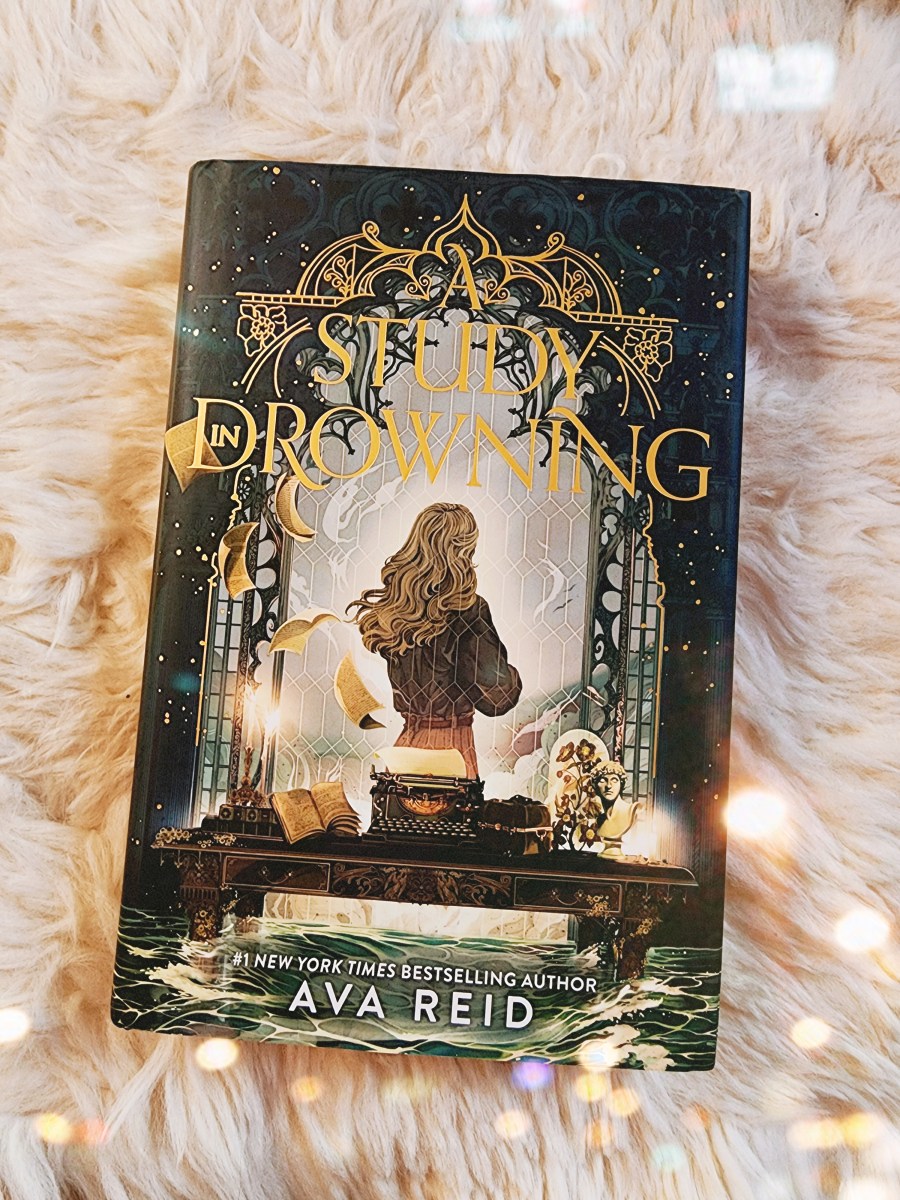
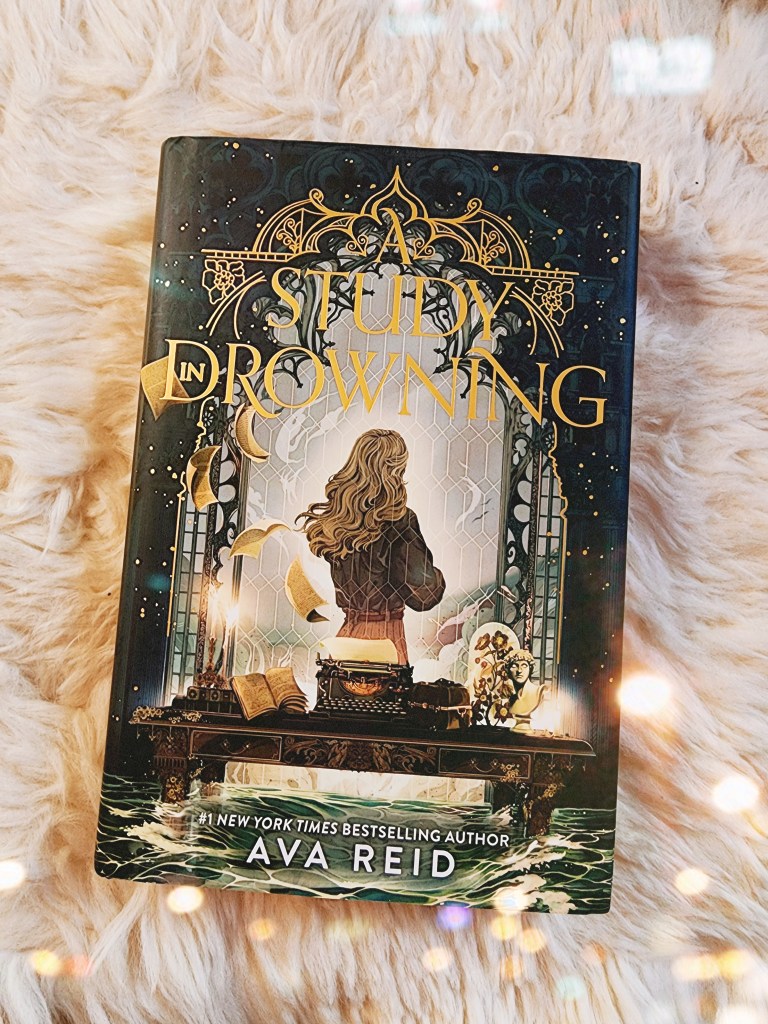
A Study In Drowning is a young adult story, a romantasy story, with it’s roots in British folklore. It’s dark academia and gothic fiction, and features the enemies to lovers trope. It’s not the kind of book I usually reach for, not being the target audience, but I like to expand my reading, and this edition has sprayed edges and beautiful binding, which made it appealing.
The book feels in style a little like Harry Potter or Fantastic Beasts, and I did wonder if the author was once a fan of that story world. The book has halls of academia, though they’re university level, not high school, and the world is on the brink of war. Half the students, loosely, seem to be from one side of the war or the other. We hear about an epic poem Angharad, places called Llyr, a morally ambiguous King of the Fairies, and poets who slumber until it’s time for them to be woken to save the country. Technologically, it seems to be similar to the 1920’s. Some women wear cloche hats and boil water in tea kettles, they have phones but not mobiles, women wear stockings made of silk, not nylon. And the character takes a train journey to her destination, which feels British, 1920’s era and Potter-esque all at once. I think this all worked pretty well, especially when you add in the crumbling estate of Myrrdin, which the sea is slowly reclaiming, and is filled with paper and books, candelabras and closed doors.
This book is style-over-substance, which I often find with these books that are made to look really pretty. Effy is our lead character, and she’s a bit of a Mary Sue in a few ways. She’s very pretty, she’s blonde and blue eyed and so smart that she’s the only woman on the architectural course. She’s beautiful, but doesn’t know it, and is hit on or harassed constantly. When she enters the competition, she wins because there’s something special about her, which is also hinted at by her visions and panic attacks. We just know that while her mother is cold to her because she’s flawed, actually, she’s going to turn out to not be mentally ill, but actually magical and the chosen one in some way. (I do wonder about the ethics of this kind of thinking, but that’s a digression). Her whole personality is being a Myrddin fangirl, which I don’t have a huge problem with, because sometimes people are at her age, but sometimes it feels a little overdone or obsessive. She has a best friend who has no competitive feelings towards her and no needs from the friendship, you know the type. It’s very shallow character development.
Which is a bit of a theme in this book, though I think it’s often true of a lot of current books in this genre: things are very heavy handed. The world Effy lives in is very sexist, with women being strongly encouraged out of traditionally male subjects and men being really weird and harassing her in the most obvious way. It makes you wonder how she comes to be a feminist, when everything that she’s ever experienced would have supported this world view, and the elder women don’t seem to be bucking the trend or talking about change. Her mother seems like a narcissist and clearly does not encourage her. She’s just a feminist in a male dominated world, out of nowhere. Also, even though the world is therefore more dangerous to women, her friends are in a lesbian relationship and no one cares, and she’s able to travel alone across country on a train, though I suppose she’s mildly discouraged from doing that. It seems that Preston is also open to women being intelligent and having rights and whatnot and again, I’m not convinced we know why he is so progressive when no one else around him is.
Effy also blindly hates Preston, the poor guy. He seems bland, but pretty nice overall. The author wanted to do the enemies to lovers trope, so Effy hates him because he borrowed some books she wanted and he’s from the other country that her country is at war with. The way she acts is so overdone and really harsh. It makes her pretty unlikable at times and get pretty repetitive and silly. Don’t worry though, she drops this behavior, not because she learned or grew as a person, but because she falls in love with him.
The book goes on to tick the boxes for all the modern hot button topics: sexism, racism, climate change, LGBTQ+ characters, bad fairies, panic attacks and mental health, sexual assault, men being uniformly and cartoonishly the bad guys, and narcissistic moms. In some ways, this isn’t a bad thing, but again, it feels like it’s done in a heavy handed, unsubtle way, and not integrated into the plot or story world, necessarily.
On the whole, the vibe of the book, the atmosphere and the ideas, are quite nice. I can see why people would like this and why it might work really well for it’s target audience. No shade if you liked this book. For me, I just prefer more depth and growth in characters, more nuance, and I find heavy handed tropes really irritating after a while. The book is here to agree with you, not to make you think and not to reflect the subtlety and context of life and humanity.
Read It If: this one really is for the target audience. I’m glad I branched out and revisited this genre, and it’s a very pretty book.
Thank you to Harper Collins for this book, which I won during one of their blogger events.
 CravenWild