
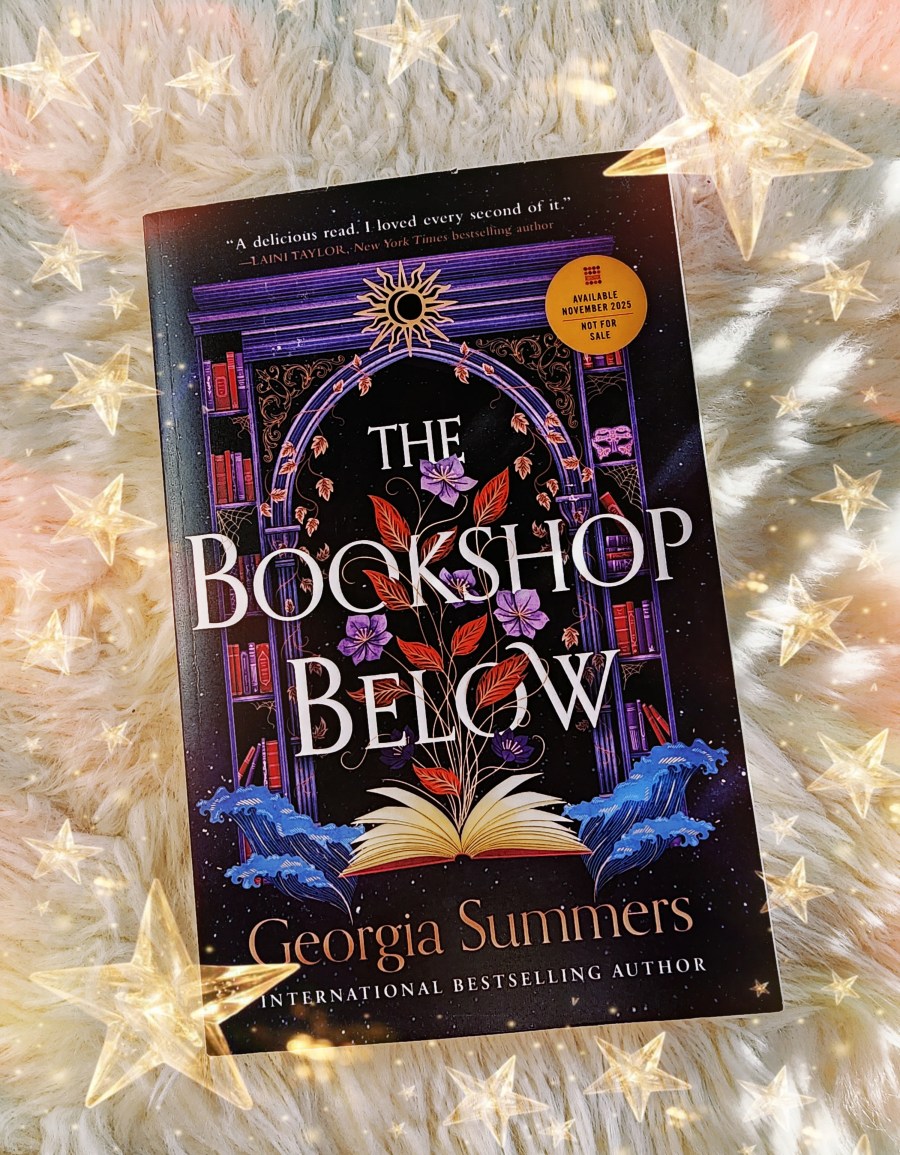
In London, Cassandra, a disgraced former bookseller, finds herself in a dangerous game when her former mentor is murdered, and leaves her his bookshop. She knows all of the underground magical bookshops must have a bookseller, but to take this on she must deal with a handsome man who also wants this coveted spot, rival bookstore owners, and of course, the killer. As she get embroiled, her past threatens to come to light and a dangerous enemy threatens the secret world of magical bookshops.
Georgia Summers is the author of The City Of Stardust, and this book is an urban fantasy, romance story. The book feels more modern, metropolitan power struggle, rather than a cute, cozy London bookstore read, which the cover art might imply.
I found this book so hard to get into. There’s some great things in here, but something about it all felt a little flattened at dull to me, and it felt slow and lacking in urgency or something.
Chiron’s bookshop is nice. It’s hidden and can only be found by some people. It’s situated over the magical river that feeds all the hidden magical bookshops, and it’s full of beautiful books. I liked the way that the shop seemed to have a personality of it’s own and some of the ways it expressed itself was great. The way magic works in this world is never fully explained and explored well. Loosely, the shops contain powerful books that can change your life, but you have to pay with something precious to you, in one case a first born child. Only some people can read the books, and only some people can enter the shop, or work there… I’m not sure why. I’m not really sure why they exist, and if there are magical bookstores, are there other magical things in the world? Like magical chess sets? Why do they exist? Some questions are answered but others just posit more questions.
Cassandra is our lead character. She lives in modern London, and therefore is depressed and needs money to pay rent. When she’s gifted the bookstore, she’s given the answer to all her problems: a free place to live, safety, meaningful work that you can never be fired from… and yet, she doesn’t feel relief or gratitude for some reason. Instead, she repeatedly doubts that she has the skills to be there, even though she actually grew up in that store AND was trained in it. Everyone around her also doubts this, and it gets very repetitive and annoying. She also used to steal books to make money. There are jobs in London, this is something she chose to do, but she looks down on the people she sells them to. Apparently, they’re the real criminals. Her criminal identity is the name Cass Holt, her real name is Cassandra Fairfax. This name change is apparently enough to ensure that no one makes the connection that they’re the same person and she’s never recognised until the plot wants her to be later in the story. I’m not sure why we’re meant to care about her and what she really wants or needs? I also found her hard to like.
None of the characters came alive that much for me. Byron has this thing with the colour blue. Lowell Sharpe is handsome and high handed, because enemies to lovers. Roth is bad because he comes from wealth and his father was mean. They’re lacking in nuance, depth, and are fairly flat to me.
Also, the choice of the faintly Ancient Greek motifs felt way too obvious. Chiron and the river, Lady Fate, and Cassandra the prophetess that no one will listen to…hink in this genre, this mythology gets overused and bastardised a lot, and I don’t think it’s as clever as writers seem to think it is, but I get that it’s popular right now.
In the end, for me, it was just a joyless slog to read. The story takes place in a magical world but it’s also modern London, and Cassandra is about as disaffected as the modern Londoner who has rent to pay. Rather than leaning into the magic and Britishness, the way Harry Potter did, or into the idea that a bookshop is alive, or that London has an of invisible string of bookshops the reader is going to get to explore, the world feels depressing, flat, devoid of joy. Here, we’re not escaping into a magic world, we’re spending time with a depressed, edgy 20 (or 30?) something who is not in love with magic and has bills to pay and cleaning to do, and we get the sense that rather than a meaningful career, a generic enemies to lovers situation will save her. (It does) This girl is not a plucky young thing with a mystery to solve, or a survivor grateful to have an amazing opportunity she’s determined to make the best of, even while enemies want to see her fail… There’s no vigor here, no energy, a lot of chores before a rushed ending. Cassandra is as greige as dishwater, spending time mopping and moping, when she could be exploring and solving. Makes you wonder why we’re here.
Read It If: Romantasy readers I think are more used to some of these tropes and problems, so no shade if this one spoke to you. Not for me.
Thank you to HBG Canada for the ARC of this book for review.
 CravenWild