
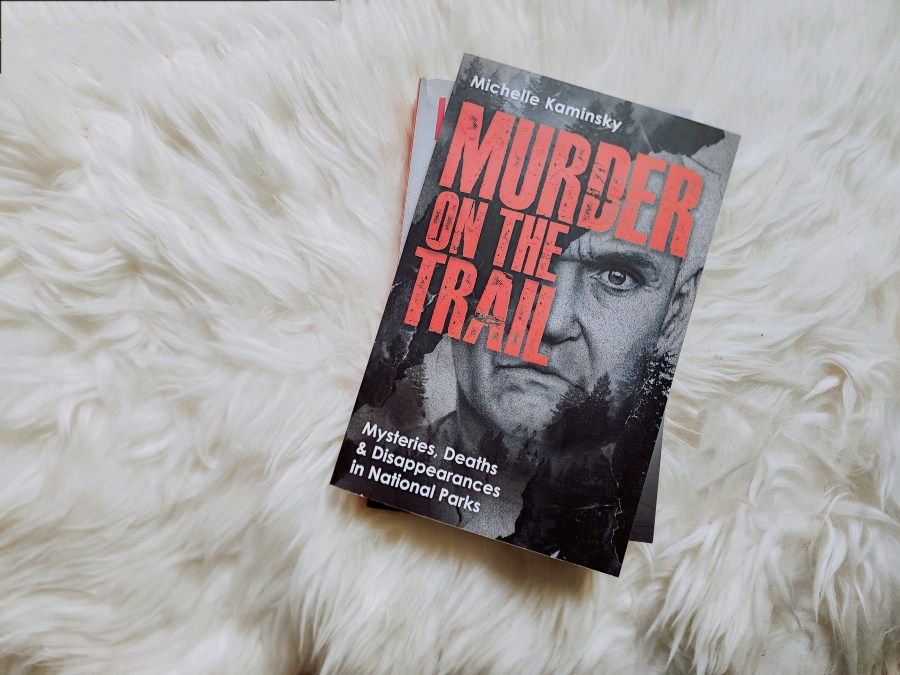
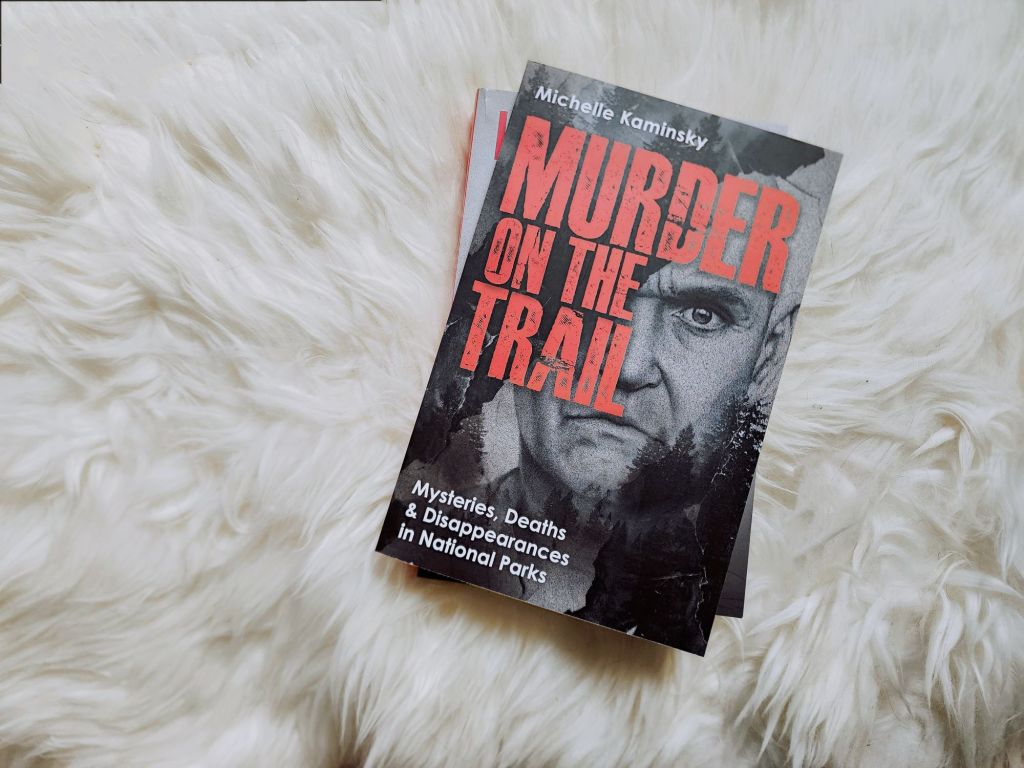
“Mysteries, Deaths and Disappearances in National Parks”. This little volume with it’s startling cover photo covers cases from the 1920’s to the 2020s that have mystified and fascinated investigators and true crime readers for decades.
As the opening chapter lets us know, National Parks can be appealing to criminals because the isolation of the location allows the perpetrator to disappear, with the odds of the crime never being solved firmly in their favour. Law enforcement for these regions face impossible odds: vast distances, remote locations, crime scenes that can’t be secured from weather and animals. It’s also pertinent to know that these crimes are under the jurisdiction of park rangers and federal workers, who have to be experts in all things forensic and scene investigation AND nature survival skills. Honestly, it sounds like a nightmare to deal with to me, but it’s what makes these cases of extra interest as a group.
This book wasn’t bad. It opens with an introduction that felt like an infodump on park history and the difficulties of law enforcement in these regions. It gives some good context and background that explains why these cases are to hard to solve or even investigate, but it felt unfocused and too broad. A few sentences would have often told us everything we needed to know here. The readers of this book are not interested in who founded each park and when. (I did wonder if they used AI for research here, it seems so unfocused and just dumped on the reader without discernment) The book goes on to add this kind of information to each chapter, which sometimes felt like padding to be to make the chapter longer, when we didn’t really have enough case information. It’s not bad, it just gives the book a self published feel. It’s a bit dry and doesn’t have the best story telling flow.
The tone of the writing reminded me of Forensic Files voiceover, which I quite liked. It’s a show I love to watch over and over, and the informational but slightly dramatic style it has works well to tell these kinds of stories. Each chapter starts with a bit of a dry info dump and sometimes some speculation about the people or historical times that wasn’t ideal, but then we get into the flow of each case, and the author got more into her stride here. Something that I didn’t like was that the opening summary of the chapters gives away too much. The author would give us a bit of a summary about the case she was about to share, but it tells the reader everything: like if it was a murder or not and who did it, if they were caught. It makes telling us the story a bit pointless, since you’ve opened with spoiling any intrigue about the story. It would make sense for a wikipedia entry, where you might be looking up the case, and want a quick version at the top, before getting into details, but not for a true crime book where you want to hear the story of the case.
If you’ve been into true crime for a while, you’ve probably heard of the cases in this book. I feel like that’s not a bad thing, since they’ve fascinated the public for years for a reason. Taken all together like this, it makes for a very intriguing overview of the phenomenon, but it seemed to me to show that the author hadn’t done any original research, no personal research, but just picked up the cases that are easy to find, and re-told them. This is no Ann Rule, for sure, and it’s not for you if you wanted cases that are new to you, that haven’t already been dissected on all the true crime podcasts and Youtube channels. Some of the cases are also about people who go missing because they’re unprepared for the terrain, which feels less than mysterious to me, personally.
On the whole, the book is a bit dry and repetitive, and seems to dump chunks of parks history into the narrative more than is really necessary. It has some tangents and is light on forensic detail. If you don’t mind light research, about the level you’d expect from the average podcaster, then this book may be of interest, or if you’re just getting into the genre and don’t know these cases. More serious readers may have higher expectations. But the theme of the cases presented is interesting.
Read It If: an entry level true crime book, it lacks research and new cases, and relies on infodumps for padding, but has interesting cases.
Thank you to Ulysses Press for the copy of this book for review.
 CravenWild