
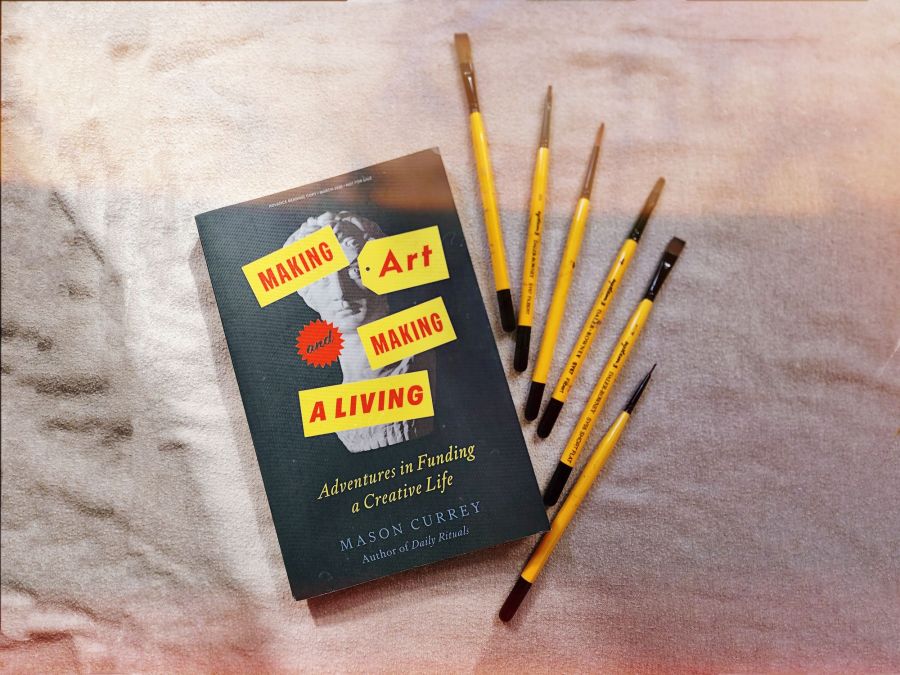
Subtitled “Adventures In Funding A Creative Life”, this book is a history of the ways in which artists and creative people have made ends meet and kept body and soul together while following their calling to make art. Whilst establishing yourself as an artist, being able to have the money to live so that you have the time and means to create is a key and core problem. The author looks at artists from different countries and time periods throughout history, and aggregates their ways of making a living, breaking the book into four sections: Family Money, Jobs, Patrons and Schemes. Of course, you can apply some of these lessons and strategies to your own life as well, if you are a creative, but it’s not a straight how-to book.
Mason Currey is a Los Angeles based author and editor who wrote the Daily Rituals books which are about how artists work. This feels like a natural follow up to that subject: how do artists actually live.
The tone of this book is very friendly and enthusiastic, which makes for a very pleasant book to spend time with. It’s often a little funny, while also demonstrating a high level of research and detail. It’s not a long book, and it moves along swiftly, meaning I was so engrossed I read it in one sitting.
This book makes some important points about living a creative life. In an increasingly expensive world, there’s questions that are raised about whether artists “deserve” grants and money from modern patrons of the arts and government grants, and yet what is our world without beauty and art? And how can we survive modern life and each other without art and creativity reflecting life back to us in ways that make it palatable? What is life with all the beauty taken out? It also reflects that creating takes away time from other things. We can’t work all the time, without rest, and expect to do good creative work, which means to create we do need financial support or remuneration. While some artists had wealthy patrons, others had family support and family money behind them, and someone else was doing all the chores. The idea that the “starving, tortured artist” makes better work is truly outdated. When the hardship stops and the creative has food, a safe place to live and a lack of anxiety, that’s when the art is made.
I found all the little life stories about the different artists really interesting. How artists made enough money to work is rarely talked about and the history revealed to me a humanity and insight into day to day life of some very interesting people. They’re also all so different: some were fascinatingly determined and others hilariously useless. Sometimes the privilege of family money or a patron comes with some very strong strings. The hand you hold is the hand that holds you down, after all. Others were very creative in the way they found time and space to create around day jobs. Sometimes the ingenuity was quite funny to read about, as some artists came up with schemes and things, though I do think some artists must have been a little bit insufferable and boorish to have to deal with or live with. While history has changed, I think a lot of creators can get a lot out of these stories about how to behave, what might work or be available for them, and how not to piss off your patron, if you have one!
I enjoyed this book so much. It was really interesting to me. I thought it was going to be a bit of a practical, how to, instructional, self help type book, but instead, it was rich in historical stories and lives, and it really grappled honestly with how finding money to make art hasn’t really changed. Its not easy, but the fact that others have gone before and done it is reassuring.
Read It If: for any artist or creator, for any of you interested in art history, it’s really fascinating reading. Also, if you are interested in how people have lived their daily lives in history, this one will appeal as well. Lovely book.
Thank you to Celadon for the copy of this book for review.

