
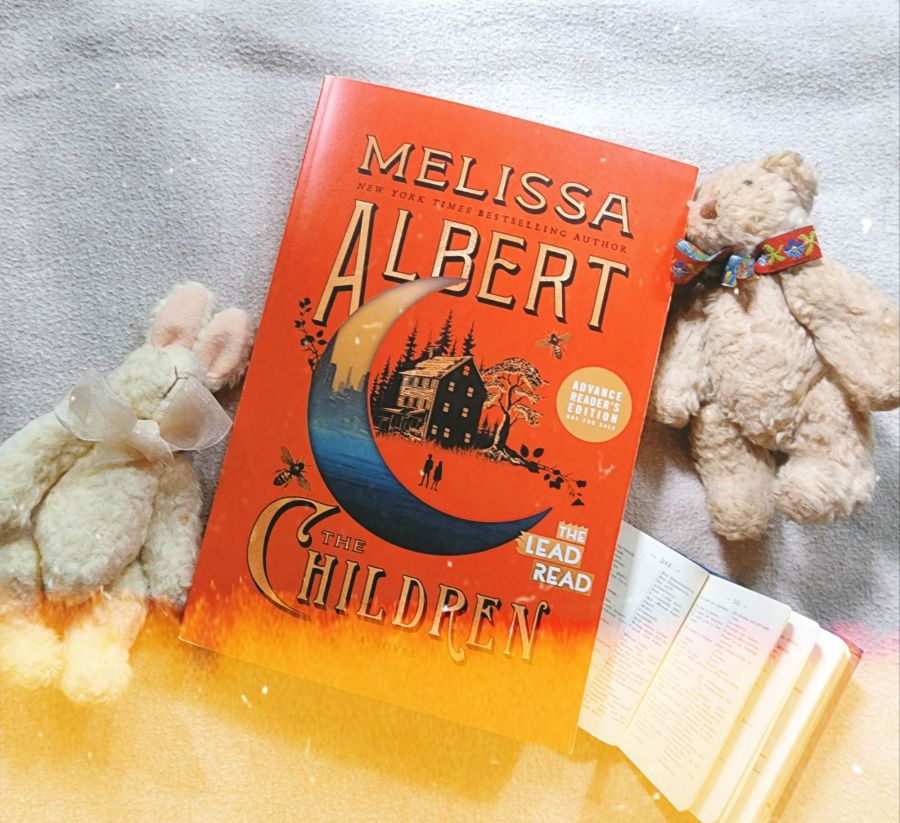
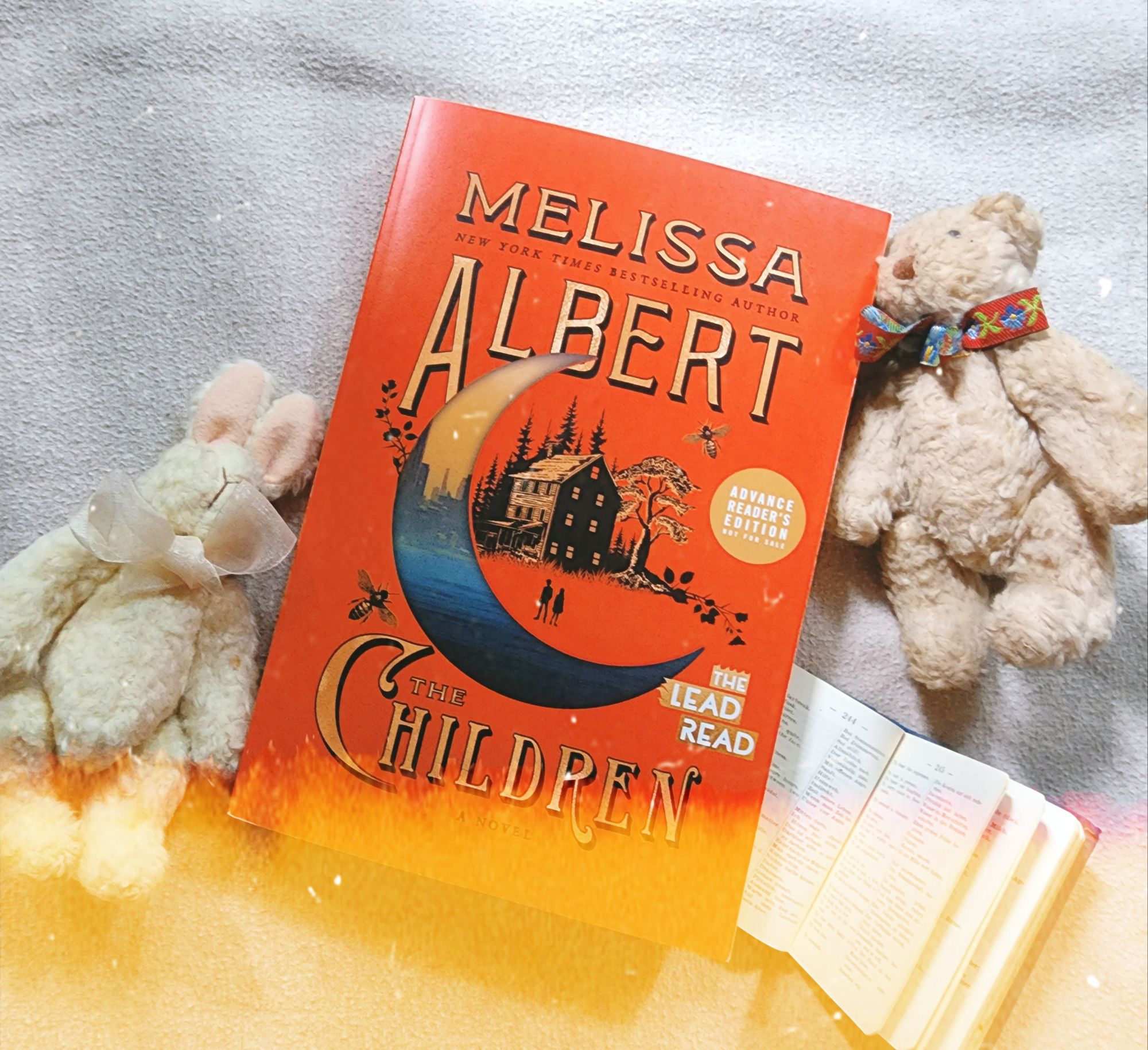
When Guinevere is promoting her new memoir about her mother, Edith Sharpe, who wrote a huge bestseller book series called the Ninth City, she finds out her estranged brother Ennis, a controversial artist, has a new exhibition coming up called Mother. Their mother’s books were about two children that were based on them, making them minor celebrities, but the reality of their childhood was secretly much darker than the public knew and it all ended in fire and death. Why are the siblings estranged? What happened on the farmstead? And is Ennis about to tell the world their mother’s secrets?
Melissa Albert is the author of The Hazel Wood, which is a YA book that shares a few similarities to this one. I’d almost go so far as to say that this book is almost the adult version of that one, or it’s spiritual successor, since they share some similar themes and ideas, but this time aimed at an adult audience. I actually didn’t like The Hazel Wood. I liked the concept but the ending and where the book went didn’t land for me. Either way, Melissa Albert seems to have an interest or fascination with the idea of the fairytale vs our world, or reality vs stories.
This book has a dual narrative, weaving together the siblings growing up at the farmstead with their parents in the late 90’s and the story of the present day where Guinevere is promoting her novel and coming unstrung. Both narratives are third person, from Guin’s perspective. Their mother’s books were about the two children escaping via a magical ticket, into a fairytale-like world just outside our own. It was so vibrant and lifelike that it gained many fans who dreamed about escaping there too. The imagery and concepts of that world and the books are spoken about a lot in the story and woven into the fabric of the children’s lives.
I think this book explores the concept of family narratives in an interesting way. By writing a memoir about their childhood and growing up, Guin is cashing in on the stories her mother wrote and the way the public thinks they had an idyllic childhood, growing up in a magical house in the woods. In some ways, her life is not the public’s business and she’s choosing not to shatter the public’s illusions about her mother and her books, allowing them to continue to love the books they grew up with. In other ways, she profiting from a lie or covering up the truth, which was that they were neglected children and were often very unsafe as well. Their mother ignored them entirely and the house was constantly filled with people who were not necessarily safe for children. They went unfed at times, drank alcohol they found laying around and were never given any schooling. And of course, there are more secrets than that, but that would be spoiling the story. Their mother used them as almost a marketing tool: the woods and the house and the children in the book are real, meaning the audience for her work feel like the books could be real. This conceals the truth that Edith feels nothing for her children and does not take care of them. I think this is something that can be relatable to some people, the public vs private family narrative. (Something I’ve spoken about in another review recently as well) Do we keep telling the lies that are palatable to others and make them happy? Or do we speak the truth? The book never really answers this, but goes in a totally different direction.
The farmhouse in this book is very fairytale-esque. There’s a sense that it’s haunted, it’s been in the family for generations and is full of carved and turned wood, mantles and doorframes sport bees and animals, flowers, and outside is an orchard humming with bees, and a dark wood. Some of the rooms feel friendly, others strange. It’s full of old furnishings and a desk with hands for drawer pulls. It’s like another character in the book, full of life of it’s own and an historical marvel. And like a fairytale house in the woods, its full of dark secrets and maybe old magic.
This book seems to have really divided people, and I can see why. The parts set in the past are strong, vibrant and well realised. The present feels flat and colourless, too modern and grounded by comparison. While I like the tension and foreshadowing that the present narrative gives, it also slows down the book and makes it too long. Also, there’s not enough foreshadowing of strangeness in the present to make the ending work.
And the big problem for me is the ending. Without spoiling too much here, this book in the 90’s narrative, feels like it could be literary fiction or horror, but it ends up being magic realism. That kind of thing is dissatisfying for a reader because it feels like a bait and switch, or a failure to deliver. By the end, so much had been promised and foreshadowed, I wondered how the author was going to make the ending big enough and scary enough to satisfy the reader, and weave all the threads together. The ending, rather than being horrifying or intense, just sort of limped home by being unlikely and not really matching anything else, not making a coherent point. It also has a weird final chapter in a publishing boardroom that feels like it was written by committee or something, and was totally unnecessary.
I think this book has some truly excellent writing, it’s very atmospheric and dark in places, all the characters are very vivid, and the house is incredibly imaginative. The way we see what’s happening at the house through the innocent eyes of a child makes it all more mysterious and tense and dark. What would have worked well was not having dual narratives, which is a tired way of writing these days anyway, and having a chronological story, cutting a lot of the present day stuff. But that ending just felt lacking in punch and even in logic. It’s just pretty weak, like the author wasn’t sure how to end it and decided to make it about fairytales and not enough about what the characters would choose to do and why, and even how the big bad works. I was left with some big plot holes and questions when I turned that last page.
Read It If: some really solid writing here, dark and atmospheric, with some wonderful fairytale motifs, but overlong and the ending disappoints. I did actually like it, but it’s one to make up your own mind about.
Thank you to Harper Collins for the ARC of this book for review.

