
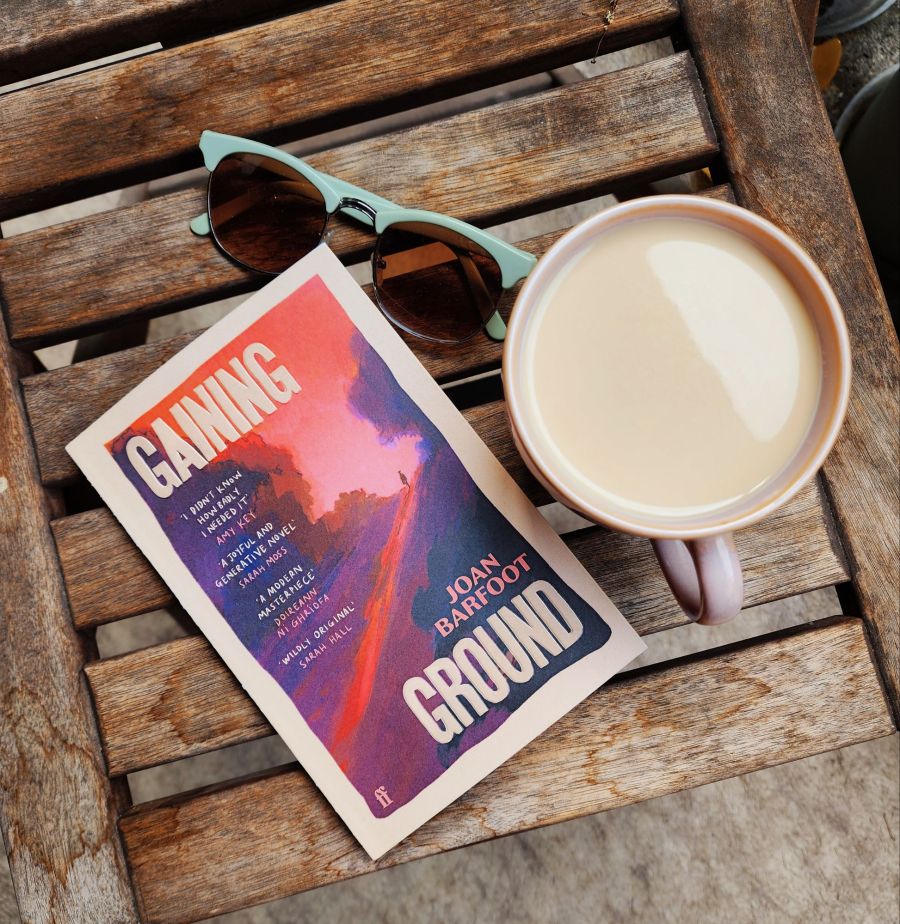
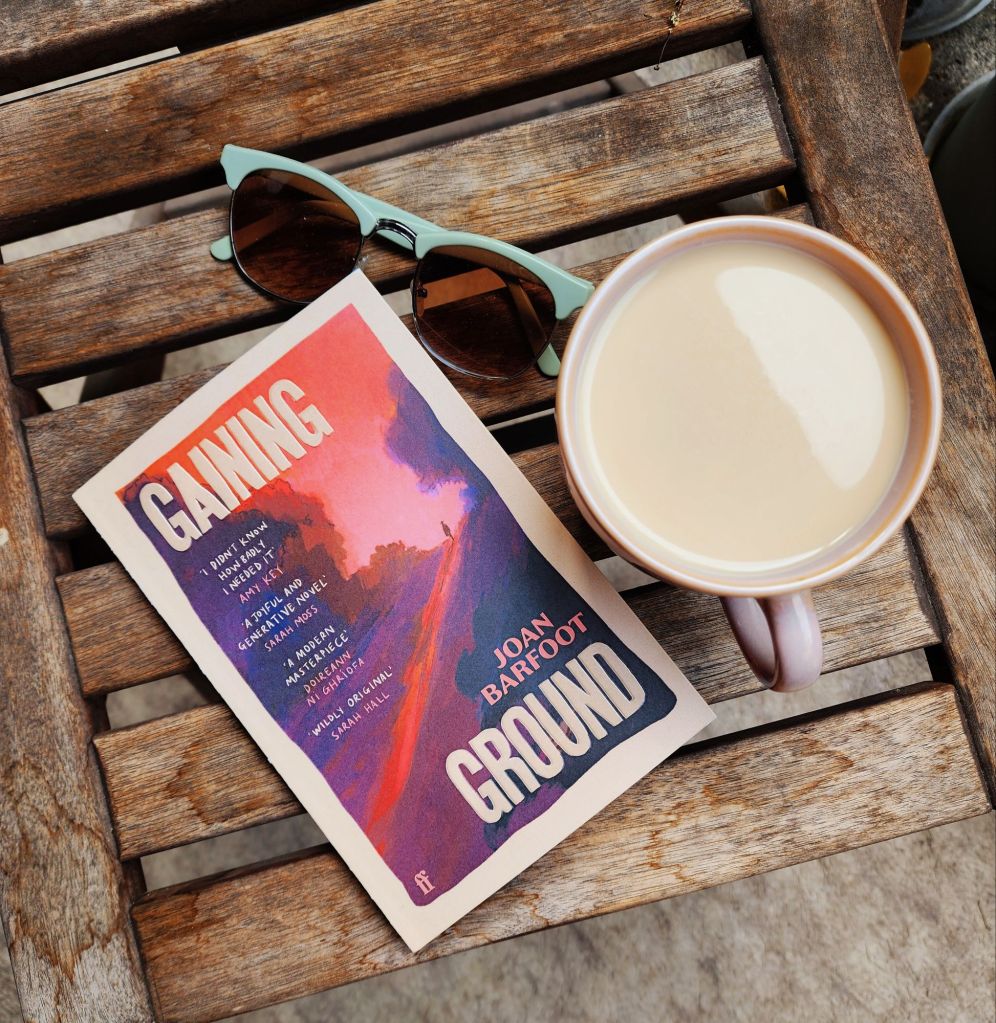
Abra was a wife and mother who was slowly dying inside in a life prescribed for her, when she one day just up and left when her children were around ten years old. Living in a cabin out in the wilderness, she’s built a life close to nature and has found herself, when her daughter, now 18, shows up and disrupts her equilibrium.
Gaining Ground was originally titled Abra, and was published in 1978. Joan Barfoot has written many award winning novels and has been considered a peer of writers like Margaret Drabble, Anne Tyler and Margaret Atwood. She’s also worked as a journalist and lives in London, Ontario.
I love that our main character is called Abra. It’s not a common name: it’s also in East Of Eden by Steinbeck, and hints at biblical origins. But to me, it’s very reminiscent of the magical phrase abracadabra: poof, and she’s disappeared from her family’s life.
This book must have been a bit ground breaking and Feminist with a capital F in the 70’s, and it feels as modern and pertinent as ever reading it today. Abra is raised well by parents who love her, she’s a classic Good Girl, following a path laid out in front of her. She marries at 19, she works to support her husband’s career, taking a job that’s painfully boring and tiring, they have kids at the convenient time and at no point is there a place where she can connect with people in a real way or have any choices. I love that her husband is kind and understanding, he’s not a bad guy, but he really wants her to fulfil a role in his life, in their children’s lives, and he never really knows her. He can’t comprehend that she may have a need to develop or feed her own soul and personality outside of the prescribed options for her. He’s not a bad husband either, he is just a product of his own society and social track that rewards him with challenges and goals and achievements, none of which are open to Abra. I like that he’s not blamed, and Abra is unafraid to take the blame for her own actions, but she also doesn’t feel bad about them either, because they feel deeply right to her. It’s simply what she has to do. And while abandoning your children is not something that may be, on the surface, relatable, the author writes her in a way that Abra feels not only understandable but also as though she, in some way, made the only choice she could.
My mother married at 19 in the 70’s. There were not a lot of options for women. My Aunts have all told me about how the options were being a nurse or a teacher or a secretary. Not marrying would be a tragedy. There was not a lot of ways to advance in those roles, either. While there have always been women who were able to break away, break the mould, somehow forge their own path, it was not the norm and the upshot if you did was often social ostracism. It’s something to think about.
The way the book takes us from our main character having a path in life and being excited to get married. She has friends and her parents are proud of her, and slowly she loses herself to being a cypher: a wife with no hobbies or friends, just working to support, not having goals of her own. The idea of having goals or a direction to have goals in feels like an impossibility. She loses herself to her first born and is a devoted mother, but finds that her children are their own people and not her whole life. She becomes isolated and depressed. Left behind. Like a doll that’s meant to sit waiting at home til someone comes home to give her life and meaning and things to do for them. In her life, there is the clock to live by, things that have to be done on or at a certain time. On the other side, there is no clock and no mirrors. There’s no identity to display for others and time isn’t passed, it’s spent, it’s lived.
I think that’s what I love about this book. It’s quite slim, but it dives deeply into it’s portrait of one woman’s psyche in a way that’s very honest, real and grounded. It’s not trying to recommend Abra’s choice or preach to the reader in any way. It’s subtle and calm and clear. While you might be left disagreeing with her choice to disappear or her lack of feelings of guilt, it’s hard to blame her. She makes perfect sense, and I loved spending time with her as she breathed and weeded, and found herself while letting go of having an identity.
The way she found the cabin, and felt a knowing and a longing, reminded me a little of Enchanted April. There’s a few books that are about women who feel called to a place, and find their real selves there. When they’re on the wrong path, the women in these stories come home to themselves in a place that should be quite foreign to them, that others tell them is not for them, but they feel called and the call leads them Home in some way. This book is a bit like that, in a way, though it’s not to romantic or even about empowering the self, or finding belonging. It’s more about letting go and in some ways it’s more rough hewn, brutal or hard and natural than romantic. It’s hard on her children and husband, who can’t understand her, and in some ways she doesn’t understand, she just knows. But to me it’s so interesting that her sense of who she is in her cabin is calm, measured, enduring and creative, while the person she has to be for others in her old life is quiet, but deeply unsettled, desperate, depressed and lost. And people are OK with that second person, as long as it’s quiet and uncomplaining. The calm one, the one not bothering anyone or asking for anything, is the “mad” one and the one who is depressed and empty, sacrificing and disconnected, is the “sane” one, at least according to society.
I love this book. It’s calm, peaceful, enchanting in a way. This getting off the beaten track and getting back to nature, reconnecting with the self, is always enticing, but I love this reality she’s created is not romantic. It’s not easier out there, life is hard if it goes out of balance, and she has to cope. But she’d also in tune with something larger than herself, and knowing she’s not that important in the scheme of things makes it all a lot easier. She just is, just lives, and somehow that is a huge act of resistance.
Read It If: you’ve ever felt stifled in the roles and life set out for you. A thoroughly refreshing read, this is a beautiful story about a complex woman and her choice to leave it all behind.
Thank you to PGC Books for the copy of this book for review.

