
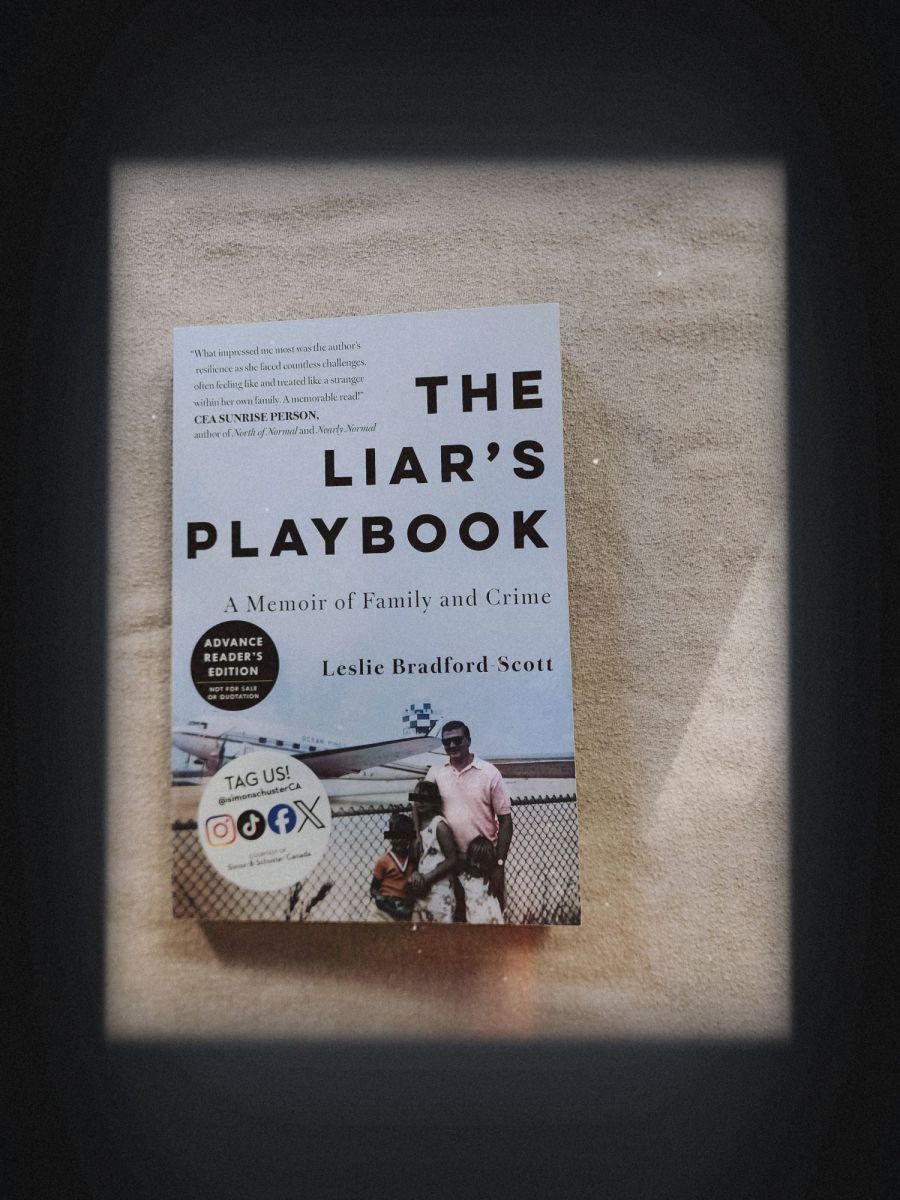
“A memoir of family and crime”
At 12, Leslie’s childhood home in Ontario was raided by police, and her mother and grandmother took her and fled to Florida. No questions allowed, no explanations given. Her life changed from an idyllic suburban childhood to a confusion of grifts and crime. Decades later, when she thought she’d come to terms with it all, her mother showed up at her house with a blue binder containing her father’s confessions, written from prison, about his story of being caught between the CIA and the Mafia. Was this true? Or more lies?
I reviewed another book, years ago, written by an adult daughter whose father was also had mob ties that she never knew about as a child, called Cradle of Crime by Luellen Smiley, HERE. I think all children go through believing in and supporting the family narrative, and don’t share family secrets publicly. Usually this is fairly benign, for example, keeping some things private or cleaning the house before guests come over, but in toxic families, this can mean keeping some pretty big secrets, or even keeping the myth of family closeness or respectability alive, while some pretty serious things are going on inside that the child isn’t fully privy to. I’ve heard people say things like “They grew up in that house, how could they not know?” but the truth is, children often don’t, sometimes spouses don’t. Or sometimes one child knows, sometimes the oldest, and protects the younger ones from the truth. Sometimes it’s safer to not ask questions in toxic families, sometimes all the answers are more lies.
So, some daughters grow up and need to share the truth, and there’s almost a new genre of authors, often women, speaking up about what their childhoods were really like or what it’s like to grow up with a sociopathic or criminal parents, and how to come to terms with that. It reminds me of how controversial Mommy, Dearest was when it came out, breaking through the barrier of sanitised film star biographies and telling the truth about someone who was held in high public esteem. I think the sensationalism really intrigued people, but a lot of people didn’t want to believe the children who started to write memoirs of what it’s really like to grow up with a famous parent and how they weren’t so shiny and benevolent behind closed doors. It can make people really uncomfortable when an adult child breaks the cone of family silence and speaks out about their parents or family. On the other hand, it can be incredibly cathartic to other people who have grown up in families like this or with an adult in their life like this, who recognise themselves, their own overwhelm, confusion and coping, in these life stories. It’s interesting too that with the rise in interest for true crime or in pop psychology around narcissism, this has shifted somewhat from celebrity stories to this new area of interest.
In this book, our author shares her family story, from her childhood and her fractured relationship with it, to her adult life, branching out and a search for belonging in the wrong places, to her finding herself, starting her business and investigating the truth about her father. Leslie Bradford Scott is a writer and podcaster, and also the founder of Walton Wood Farm self care products.
The book involves Leslie telling her story of childhood into young adulthood, and some of the major dark events, juxtaposed with excerpts from her father’s confessions, which tell a different version of events that make him look good. Later in the book, we learn about her getting her hands on this book, and her fact checking his story and finding out what he was really into and his criminal connections, his claims that he worked as an informant with the FBI, CIA, etc.
I felt so much for little Leslie. She and her brother were lovely kids who were in very hard, neglectful and unloving, unsafe circumstances. While her mother wore diamonds, her brother was never provided with health care or a puffer for his asthma. While their older sister Margot was their father’s favourite and golden child, sent to good schools and dressed well, Leslie was not given lunch money, clean clothes or the tutoring she needed to get on at school. Their father used to play jokes on them, like dare them and shame them into jumping off a boat, and then leaving them to possibly drown by driving the boat back to shore. Any resentment was met with the classic, can’t you take a joke? It’s infuriating and very sad. As they grew up, Leslie and her brother were expected to meet adult demands and be put in dangerous situations at a very young age.
In a later part of the book, we learn about Leslie’s resilience and her growth, which I love. I’m so glad that she was able to turn things around and build a healthy life for herself, though I wish that she hadn’t had to. It means the book doesn’t just descend into darkness for the reader, it has a hopeful outcome. We also get more into the parts of her father’s life that she investigates for herself, and some more of his story. I’m in two minds about this. I do think looping back over previous events is slightly repetitive, it’s not an ideal structure, but it does work. I think for me, the author still wants to believe her father’s innocence to some extent and can’t quite admit to herself who he really was. Yes, he was charming and there were times when they had a good relationship, and it’s OK to love that about him. But I think from the included parts of his memoir, he really seems grandiose, like nothing is ever his fault, he’s a victim, he revises history when it doesn’t make him look good, he has a persecution complex, and his wanting to link himself with people in positions of power and status, his grifting and lack of care for the people he negatively impacts: he’s either a narcissist or a sociopath, and she can’t quite go far enough to admit that fully to herself. As she reads his words, she starts to sometimes doubt her own memory of events, and I did find that hard to read sometimes. It’s like he was still gaslighting her. She at one point puts his behaviour down to him having ADHD, which really doesn’t explain his behaviour or excuse it.
I also think that the book could have examined his relationship with the eldest daughter Margot a little bit more. The author, understandably, has a difficult relationship with her older sister. There’s an age gap, which doesn’t help. But their father really singled her out and treated her preferentially, but to an extreme. While she is in some ways spoiled, it’s hardly by her choice. The Golden Child in a toxic family is also abused. There’s definitely some Emotional Incest there as he starts to prefer his teenage daughter over his wife when she refuses to attend things. He dresses Margot in furs and diamonds, takes her as his date on business meetings with criminals, and whisks her away from school for weekends in Paris. She’s tasked with organising their brother’s funeral, when she’s barely out of her teens herself. It’s definitely not OK, and this isn’t really grappled with that much here, perhaps because it’s not the authors story to tell? I’m not sure.
It’s a really engrossing read. I read it pretty quickly over two days. While at times it’s very sad and I feel so much compassion for the author, it’s also not a depressing story overall. I liked that it’s really Leslie’s story about coming to terms with the circumstances of her life and her family, of finding herself, not just about her father. It’s a really fascinating story, and I think it’s a new angle on true crime stories.
Read It If: you come from a dysfunctional family. This one will appeal to true crime reader’s or those interested in psychology or real life stories. Poignant, tragic, but ultimately healing.
With thanks to Simon & Schuster for the ARC of this book for review.

