
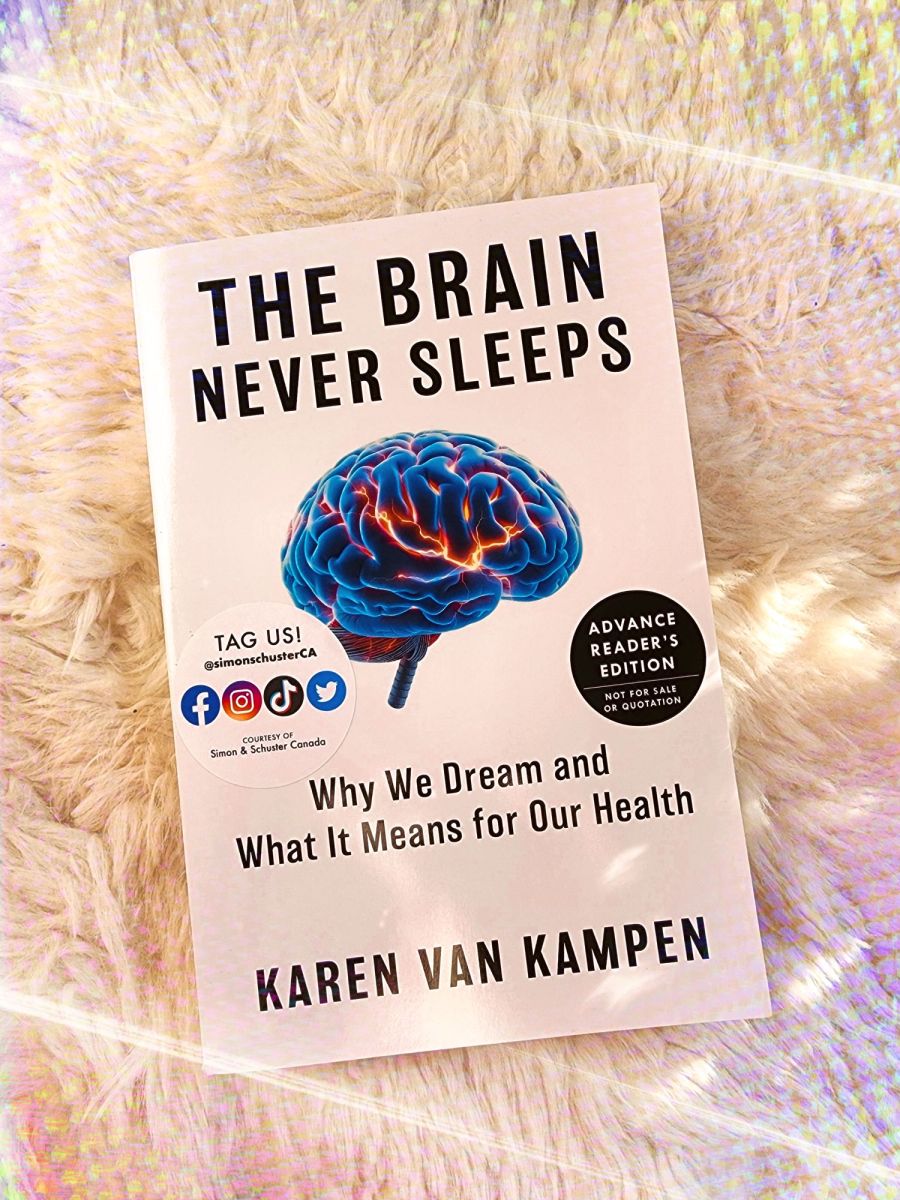
“Why we dream and what it means for our health.”
We’re currently in a social climate that doesn’t value sleep and rest, and rewards busy-ness and productivity. When the author found out that most people aren’t sleeping properly and a lot of people aren’t hitting REM sleep, and therefore not dreaming, she became fascinated by what that meant. Our bodies and minds need dreams to function properly, and not dreaming or sleeping well impacts our physical and mental health in many ways. This lead her into studying the subject and into writing this book.
Van Kampen’s father was a Coroner originally, where he saw many cases of people dying of heart attacks in their sleep, and he wanted to know why, so he became a sleep doctor. So Van Kampen, then, grew up in a household that valued and had an interest in this area of science, and as a teen she helped her father out with small tasks in his lab. As an adult, she followed him into this world, studying the subject herself. She’s an award winning journalist who writes about health and science, and she’s also the author of The Golden Cell. She also lectures at University of Toronto.
This book is quite dense. There’s a lot of information about sleep and dreams, from the history of sleep and dream research, from Freud to Aserinsky, through studies on what happens when we sleep and why, from psychology to neuroscience, from dream journaling to lucid dreaming. There’s an incredible amount of detailed research here and the way the book is structured takes us deeper and deeper into the human mind and psyche while we sleep. If you’ve ever wanted to know anything about this subject, this book is very comprehensive.
I was really interested to learn that dreams function a little bit like therapy: our brains use them to process things that are coming up in our lives and test things out, working through problems and new skills. Sometimes we practice scary or new situations, which can lead to nightmares if we get overwhelmed, and this whole process can’t function properly in people with PTSD. And also that people who live in more communal settings and closer to the land dream slightly differently than we in a Western city environment, for example. It’s all very fascinating.
I did find this book a little dry and hard to get into sometimes. Unusually for me, this one took me a little longer to read than non-fic usually does. I can’t quite put my finger on why. I liked it. I was interested in the subject. The level of research is excellent. Somehow, it just all felt a little slow and I had to stick with it a little bit. I think perhaps it’s one to keep by your bedside and read it a chapter at a time, and just allow it to all sink in.
Read It If: you’ve ever wondered what one of your dreams mean or wished you could get better sleep. It’s a truly riveting subject, and the author really covers so much in this book.
With thanks to Simon & Schuster Canada for the ARC of this book for review.

